Ex-Child: Examining a Right for Estranged Adult Children to Legally Divorce their Parents
publicv1A legal process for unilateral no-fault termination of parental rights could provide freedom and dignity to adult survivors of childhood abuse, coercive control and parental harassment.
https://substack.com/@familyofchoice
Oct 13, 2026
For survivors of childhood abuse, coercive control, dysfunction or neglect, childhood may not be a period of safety and belonging. Instead, it may be something to be endured until they are finally able to leave. Turning 18 can represent a light at the end of the tunnel, an amnesty after an 18 year sentence, perhaps the first time to experience dignity and be treated as a human being.
However, legal adulthood does not mean that a controlling parent will voluntarily relinquish control. Some parents may respond to an adult child's departure with threats, intimidation, attempts to discover their whereabouts, or misuse of missing person reports or guardianship claims to compel their return. Turning 18, getting a new phone number, moving to another state and legally changing your name may not be enough to protect an adult from a determined parent.
A robust legal and social process for an adult child to permanently end their relationship with a parent could provide protection in these cases - not merely "becoming estranged" or "going no contact", but a legally enforced right to move on and build an independent life without an unwanted relationship following them.
Where "estranged" describes a state of separation, "ex-child" would describe a relationship that has been deliberately and permanently ended.
That difference could matter socially and legally. Someone saying: "I'm estranged from my father" or "I'm estranged from my mother" or "I'm estranged from my parents" can leave the listener wondering, "Are you hoping to reconcile someday?" or "Maybe you'll talk again eventually."
Whereas: "He's my ex-father. I'm his ex-son." or "She's my ex-mother. I'm her ex-daughter." or "They're my ex-parents. I'm their ex-child." communicates something much more definitive: the relationship is over, and reconciliation isn't an implied goal.
In essence, it expresses: "I was born this person's child, but I have terminated that relationship and am no longer legally claimed as their child."
How might this process work in practice?
At 18, an adult child could formally declare: "I am an adult. I voluntarily terminate my legal parent-child relationship with X."
This could be through a court order or a simple administrative declaration witnessed by a lawyer, social worker or other professional - much like a formal notice of no contact.
The sole requirement would be that the adult is acting of their own free will and understands the consequences, similar to the role of informed consent in healthcare. Analogous to no-fault divorce, the former parent would have no right to veto, appeal, or otherwise revoke or prevent the severance.
The intent is not to give courts discretion over whether an adult has "suffered enough" to deserve freedom from a parent or whether a parent has a "legitimate interest" to continue to have access to their adult child.
The foundation of a unilateral no-fault exit right is as follows: a continued relationship requires mutual consent from both sides, and ending your participation in it does not require the other person's agreement.
After severance - or "unilateral no-fault termination of parental rights" by the adult child - the following would apply:
- The former parent has no parental decision making authority
- Neither person is the other's next of kin
- No financial obligations, child support or inheritance
- Neither has a right to medical, educational, employment, financial, governmental, or address information about the other
- Government databases may not disclose the adult's address, current name, or other details
- Commercial people finder or family tracing services may not disclose information
- A missing person report does not give the former parent an entitlement to the adult's location or current name
- A police wellness check could verify that the adult is safe without disclosing their location or current name
- Attempts to circumvent the order through friends, relatives, employers, schools, government employees, investigators or social engineering could be treated as stalking or harassment just as they would be if committed by an unrelated person
- The adult can designate a partner, friend, lawyer, social worker or another person as their emergency/healthcare contact
- The former parent cannot veto the adult's marriage, medical care, residence, employment, name change, etc.
- The adult can explicitly instruct institutions: "Do not disclose my information to this person under any circumstances."
The court would terminate all special legal privileges arising from parentage. The former parent would then be treated like any other person - essentially as a "stranger who happens to share DNA".
In the case where a guardianship is determined necessary by independent legal experts - not by the parent's own testimony - the adult would be able to choose a guardian of their choice who would not cooperate with or disclose information to the adult's former parents. Parents and biological relatives would not have any claim over the adult. This means that people with support needs could receive support from a self-chosen guardian such as a social worker, nurse or NGO, and birth parents could not abuse the guardianship system to retain access to their adult child against the adult's will.
If the ex-parents:
- Repeatedly try to contact the ex-child against their will
- Try to discover their address, current name or other personal details through third party services
- Harass them in person, through social media or via third parties
- Slander them in person or online, including false allegations of mental illness, drug use, vulnerability or incapacity
- Manipulate their employer, landlord, doctor, friends or partner into providing information or facilitating forced reunification
- Obstruct obtainment of government identification, such as a birth certificate, SSN, driver's license or passport
- Send police to their home with false allegations, false wellness checks or false missing person reports
- Flag the adult as a missing person even when it is known that the adult has intentionally gone no contact with the former parents
- Physically force them to return to the former parents' home and prevent them from leaving
the fact that they were the adult's birth father or birth mother wouldn't give them an exemption. If it would be regarded as harassment, slander, false allegations, coercion, stalking, social engineering, misuse of police resources, kidnapping or false imprisonment if committed by a stranger or ex-partner, it would be similarly regarded as such if committed by an ex-parent.
Sean Williams argues that adult children should have a genuine legal right to exit the parent-child relationship in his paper "Divorcing Your Parents", published in the UC Davis Law Review in 2023. Williams says that he considers the ability to exit dysfunctional family relationships as foundationally important for autonomy and identity. His proposed answer is essentially adult parental divorce: a unilateral no-fault procedure to renounce parental rights after the age of 18.
A formal severance pathway could also help in social situations. The statement "I have legal severance" would carry a different weight from "I don't speak to my family" or "I ran away at 18". The legal backing of severance would present the adult's decision as deliberate, final and non-negotiable, which could reduce pushback, social stigma, pressure to reconcile, or worse, attempts at forced reunification.
A symbol could be useful for affirmation and community support. Just as the semicolon symbol and ribbon symbols represent survival in the face of adversity, a symbol representing permanent exit from the parent-child relationship could help individuals assert their decision to leave; for example, expressing that their exit was a means of self-protection that cannot be overridden by their birth parents or any other third party. One possible candidate is the cut-off genogram symbol, which depicts a broken connection with lines diverging in opposite directions - a permanent exit where the individuals get further away as time goes on, as opposed to a temporary dispute or surmountable barrier. As a community symbol, it could find use in support groups, advocacy and NGOs. As a badge, flag or tattoo, it could assert "my parents no longer have ownership over my body; my body, my decisions and my life belong to me".
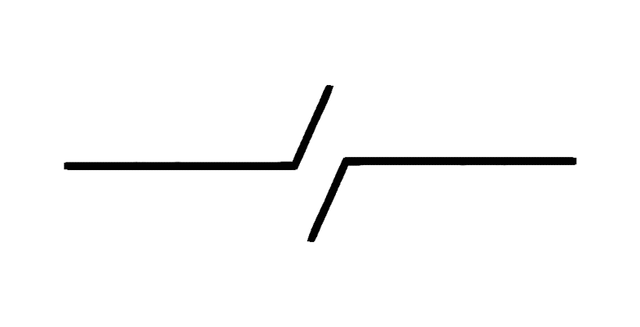
Figure 1: The cut-off or estranged genogram symbol showing a broken bond and diverging paths
The term "ex-child", the cut-off symbol, and most importantly a legal process for no-fault unilateral revocation of parental rights could provide freedom and dignity to adult survivors of child abuse, coercive control and parental harassment. Survivors would no longer be seen as a child who is merely estranged and who is expected to eventually reunite, but as an adult who has consciously ended the parent-child relationship and is free to move forward without being treated as permanent property of another person.
Tags: Adult child, legal adulthood, family of origin, family of choice, voluntary relationships, going no contact, estrangement, legal severance, termination of parental rights, no-fault divorce, coercive control, parental harassment, children's rights
Further Reading
Consider someone who reported abuse at 10, 12, or 15, was not believed, was forcibly returned to the parents' home, and then spent years counting down until legal adulthood. They may have learned that their only realistic escape was surviving until 18.
Then at 18 they discover:
- Their parent can still contact them.
- Their partner, friends and relatives can pressure them to reconcile.
- Their home address and new name may be discoverable through ordinary records.
- Institutions may still treat the parent as someone with a special relationship to them.
- The parent can continue claiming authority over their life.
From that person's perspective, "turning 18" did not necessarily create full freedom. It granted legal adulthood, but not necessarily a clean break.
A legal severance process would be a way of saying: the state failed to protect this person as a child; it should not then force them to maintain a legal bond to the person who harmed them as an adult.
The Right to Leave: When an Adult Child Permanently Severs Parental Ties
Imagine a child who has wanted to escape from their birth family for as long as they can remember. Home has never meant safety, belonging or love. They experienced joy and acceptance with friends, teachers and communities, but at home, they only felt fear, dread and aversion against their birth parents. They never wanted to be there. But they were not allowed to leave.
At sixteen, they start working and saving money. Every paycheck brings them closer to freedom. They count down the days until they turn eighteen, when they will finally be legally entitled to decide where they live and who they associate with.
As soon as the relationship was no longer compulsory, the child immediately left.
On their eighteenth birthday, they take their hard-earned savings, walk out the door, and never return. This is not an impulsive act of rebellion. It is the culmination of years of planning, longing and endurance.
The parents may see something entirely different. From their perspective, a child was there one day and gone the next. They may feel entitled to track the adult down, involve police, contact NGOs and family tracing services, or enlist private investigators to bring them home. They may interpret the departure as disrespect, vulnerability, or an illegitimate attempt to end a relationship they believe must continue indefinitely.
But from the adult child's perspective, the relationship was never freely chosen. They already endured eighteen years in a home they desperately wanted to leave. If they had been allowed to choose, they might have left years earlier for a foster family, group home or emancipation. But they were denied that choice. Turning eighteen was simply the first opportunity they had to exercise their freedom legally.
They already served their eighteen year sentence. They do not owe their parents another eighteen years, continued ownership over their body, or another opportunity to exert control.
This raises an important question: why should an adult have to rely on the permission of the very people they are fleeing to achieve a clean break?
One possible solution is a legal mechanism for unilateral no-fault termination of parental ties. At eighteen, an adult could formally sever the legal relationship with their birth parents without needing to prove wrongdoing or obtain parental consent. Following severance, the former parents would have no legal claim over the adult, no entitlement to their address or new name, and no rights to visitation, custody or decision making. They would no longer be treated as next of kin. Police, NGOs and tracing services could recognize and respect this legal boundary rather than facilitate unwanted reunification.
Such a remedy would recognize a fundamental distinction: parenthood does not confer lifelong ownership of another human being.
Some parents may believe that a relationship must continue because they created a child. But a relationship maintained solely through legal coercion is not the same as a relationship freely chosen by each person.
For someone who spent eighteen years waiting for the right to leave, adulthood is not an invitation to force their return. It is the first day they are finally free to stay away without threat of forced return.
They left because they wanted to leave. They stayed away for decades because their decision is final. Leaving allowed their wounds to heal and permanent severance means these wounds will not be broken open again. And their freedom to live safely, independently and with dignity should not depend on whether their former parents accept that decision.
The right to bodily autonomy and personal safety is widely recognized in principle, yet people can behave as though the parent–child relationship creates an exception that never expires.
People generally understand that an adult may need to escape an abusive partner, conceal their location from someone who threatens them, or find somewhere safe to sleep rather than remain exposed to danger. Yet when the person someone is trying to escape is a parent, the same desire for distance and protection can be treated as betrayal, illegitimate or even a symptom of mental illness.
The underlying assumption is that parenthood creates an entitlement to permanent ownership: access to the adult child's presence, whereabouts, personal information and mandatory participation in the relationship. The adult child's wishes become invisible against the parent's desire to maintain the bond even against the adult's will.
Why should turning eighteen nominally grant someone the right to choose where they live and who they associate with, but not grant meaningful protection against being pursued by the people they have intentionally fled from?
An adult who leaves their birth parents should not have to prove that they suffered enough to deserve autonomy or protection. They should not have to persuade their parents to accept the separation. And they should not have to endure unwanted contact, location tracing or coercive attempts at reunification simply because the people pursuing them happen to be their birth parents.
A society that takes personal autonomy seriously must recognize that family ties do not override the right to seek safety, have autonomy and participate in society as an independent adult.
An adult is not their parents' property for life. They are not required to surrender their independence to satisfy someone else's understanding of family bonds. And any right to leave a relationship must defend the right not to be forcibly returned to it.
Coercive control is a fundamentally different phenomenon from the kind of parent–adult child estrangement usually discussed in popular psychology.
The central issue isn't that two adults disagree, that a parent disapproves of a child's choices, or even that they cannot maintain a civil relationship. It is that the parent does not recognize the child as a separate, legitimate adult person with the authority to make decisions, refuse contact, leave home, or tell their own version of events.
At 18, 25, or 30, the person may be legally an adult, but the parent continues to treat them as someone whose autonomy can be overridden. In extreme situations, the parent may try to use police, confinement, surveillance, or other authorities to enforce that view.
That changes the meaning of estrangement considerably. The adult child isn't necessarily withdrawing from a relationship that has become painful. They may be trying to escape a relationship in which their right to exist as an independent person is itself denied.
A lot of writing about estrangement focuses on competing accounts of a relationship:
- The parent says the child is ungrateful; the child says the parent was controlling.
- The parent wants reconciliation; the adult child wants distance.
- Both sides have different memories, expectations, or interpretations of what happened.
Even when the literature recognizes abuse, it often still frames the situation as a damaged relationship between two people who each have a perspective.
This is something more fundamental: one party refuses to recognize the other party as an equal participant in the relationship at all.
The parent is not simply saying, "I disagree with your decision." The implicit position is closer to, "You do not have the authority to make that decision. I have the authority to decide where you live, whether you can leave, and whether your words count."
That creates a profound asymmetry:
- No meaningful dialogue: The adult child's words are not treated as testimony from a competent person.
- No legitimate disagreement: Resistance is interpreted as disobedience, instability, manipulation, or proof that more control is needed.
- No recognized right to leave: Separation is treated as an act of defiance or disappearance rather than an adult's decision.
- No mutually accepted reality: The parent may present the situation to outsiders as a family problem requiring intervention, while the adult child experiences it as coercion or captivity.
In this situation, the usual advice to communicate better, explain your feelings, set boundaries through conversation, or find common ground can be dangerously beside the point. Such advice assumes that the other person recognizes your standing to speak and make decisions.
Several consequences are plausible when a parent persistently denies an adult child's autonomy and enforces that denial through threats or control.
The person may be forced into a permanent child role
The parent continues to occupy the position of the only legitimate decision-maker. The adult child's own wishes, perceptions, and judgments are treated as irrelevant.
This resembles infantilization: treating a person as less mature, less competent, or less entitled to autonomy than they actually are. When combined with coercion, it can become more than an overprotective parenting style.
The person can be 25 in chronological age while being treated as if they have no right to decide where they live.
Resistance may become evidence against them
In such a relationship, the adult child can face a closed loop:
- The parent says they are incapable of making their own decisions.
- The adult child objects or tries to leave.
- The parent interprets that resistance as proof of incapacity, defiance, or dangerousness.
- The parent responds with more control.
The adult has no recognized way to demonstrate competence because the very act of asserting independence is used to discredit them.
This is one reason coercive relationships can feel impossible to resolve through ordinary conversation. The controlling person has the power to determine not only what happens but also how the other person's resistance is interpreted.
The person may lose confidence in their own agency
Long-term coercion can contribute to hypervigilance, shame, difficulty making decisions, anxiety, and a feeling that one's actions do not matter. Some people become highly compliant; others become intensely resistant, secretive, or desperate to escape.
These are possible adaptations, not inevitable outcomes. Nor do they indicate that the adult child is inherently incapable of independence.
A crucial distinction is that someone can struggle to exercise autonomy after years of having it suppressed without lacking the capacity for autonomy in the first place.
Adulthood may become something the person has to establish without parental recognition
Ordinarily, adulthood is supported by social recognition: people take your decisions seriously, respect your privacy, and accept that you can leave.
In the situation of coercive control, the person may have to build an independent identity while the parent continues to deny that identity. Even after physical separation, the parent may remain powerful because the person anticipates being tracked, disbelieved, reported, or forcibly returned.
Coercive control: A pattern of domination involving surveillance, intimidation, restrictions, and interference with freedom
Infantilization of adult children: Refusing to recognize an adult child's competence, agency, or independent identity.
Psychological abuse and autonomy deprivation: Undermining a person's ability to trust their own judgment or make decisions freely.
Enmeshment and pathological family control: Family dynamics in which separation and independence are treated as unacceptable.
Institutional betrayal or systems abuse: Situations in which authorities or institutions are used in ways that compound an individual's vulnerability.
A parent expressing concern about an adult child is not the same as a parent attempting to use law enforcement to deprive that adult of liberty. Whether police have any lawful basis to intervene depends on the actual circumstances and applicable law; parental authority alone does not generally give a parent the right to kidnap or confine an adult child.
What happens when the parent–child relationship never transitions into a relationship between two people who are both recognized as persons in their own right?
The adult child is not simply rejected, misunderstood, or cut off. They are denied the standing required to participate in the relationship as an independent person. The parent may continue to claim the authority of parenthood even after the child has reached adulthood, and resistance may be treated as justification for escalating that authority.
That is a different problem from the familiar question of how estranged parents and adult children might reconcile. Reconciliation assumes that the parties can eventually recognize each other, listen, and negotiate. Where one party denies the other's right to speak or leave, the more fundamental questions concern autonomy, coercion, liberty, and recognition.
Divorcing Your Parents
Sean H. Williams
University of Texas School of Law
Date Written: June 6, 2023
Abstract
This Article argues that adult children should be able to “divorce” their parents. In loftier prose, they should be able to free themselves from the state’s conscriptive family law regime that assigns them a legal status-relationship at birth and reifies natural law by refusing to even contemplate the possibility of exit. To illustrate the issue, it begins with stories of egregious parental wrongs, and the resulting adult children who feel that they are harmed when the state insists that they cannot exit the legal-parent-child relationship. Even absent serious wrongs, some adult children want the state to recognize the people who parented them as legal parents, and conversely, to revoke legal recognition from their existing legal parents. Giving adult children the power to exit dysfunctional relationships is foundationally important for autonomy and identity. This is largely taken for granted in other adult relationships. But a façade of natural law occludes the possibility of exit from parent-child relationships. Once we see through this façade and understand that the legal definitions of family are political decisions, we can correctly identify that the proper questions are when and how, not whether, to allow adult children to exit the legal-parent-child relationship. Robust and unilateral exit rights best respect the autonomy and identity interests of adult children. Recent victories in recognizing families of choice should not be artificially constrained to empower only parents. Adult children, too, deserve the opportunity to create families of choice, which necessarily entails the power to leave families of conscription.
Citation:
Williams, Sean H., Divorcing Your Parents (June 6, 2023). Forthcoming UC Davis L. Rev. (2023), U of Texas Law, Legal Studies Research Paper , Available at SSRN: https://ssrn.com/abstract=4470310
comments (0)