How Concrete Supports Durable Construction of Boundary Retaining Walls
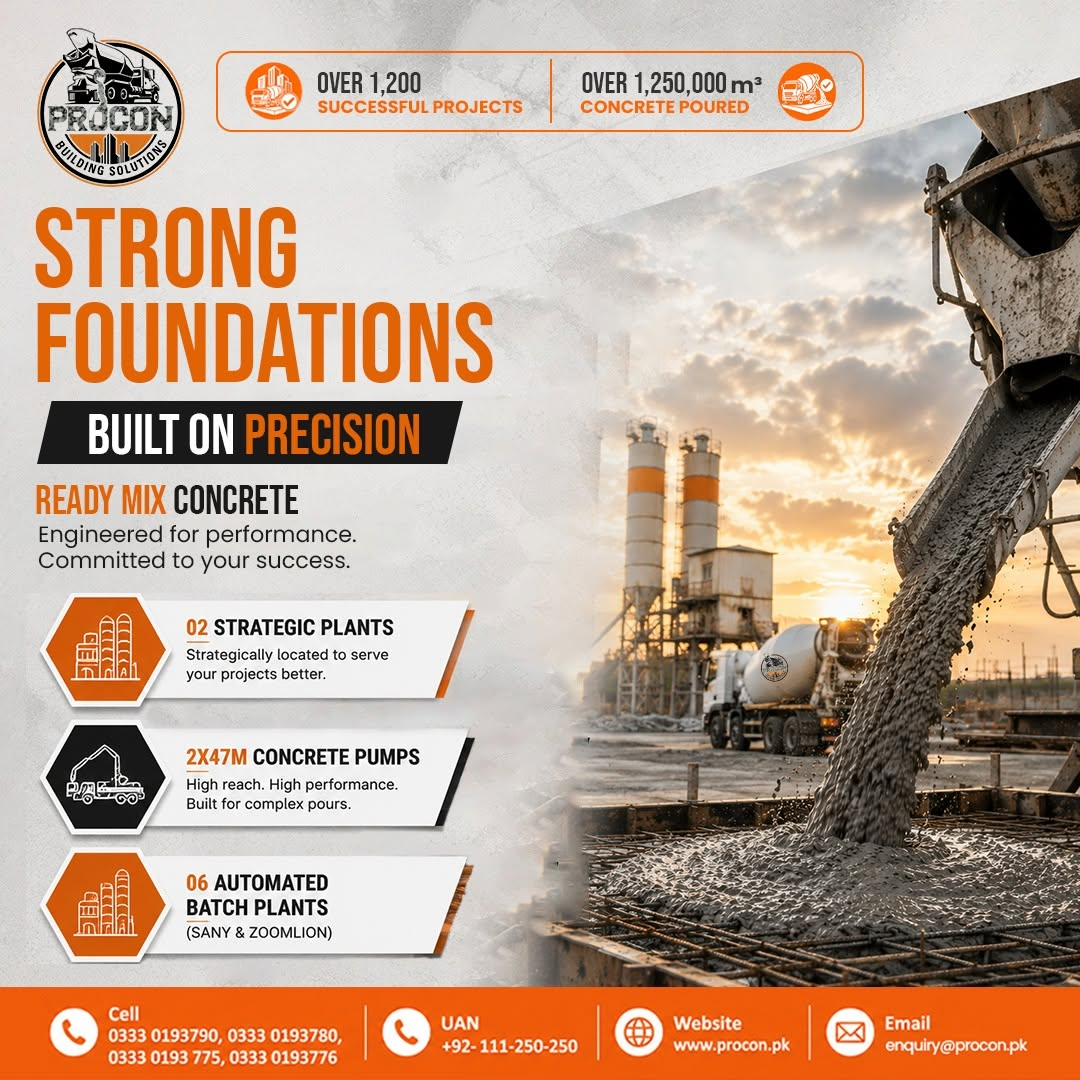
Boundary retaining walls serve as critical perimeter barriers, providing security, privacy, and essential earth-retaining support for residential estates, industrial complexes, and commercial properties. Unlike standard partition fences, these heavy-duty structural walls are subjected to relentless physical forces, including lateral soil pressures, wind loads, and fluctuating moisture tables from surrounding terrain. Ensuring these structures stand resilient against environmental wear requires robust material engineering and precise installation methodologies. For developers and property owners seeking uncompromising quality and structural longevity, sourcing high-performance ready mix concrete in Pakistan ensures that every boundary wall is built on a foundation of scientific strength and reliability.
Boundary retaining walls are fundamentally engineered to hold back masses of earth that would otherwise slide or erode into lower elevations. The weight of retained soil generates continuous lateral pressure against the back face of the wall, increasing exponentially with depth.
To prevent the wall from tilting, overturning, or shearing under these heavy geotechnical loads, the concrete mix must possess superior compressive strength, high flexural rigidity, and deep reinforcement integration. Engineers must calculate soil density, surcharge loads, and water table levels during the planning phase to determine the appropriate wall thickness and footing dimensions, ensuring the concrete matrix can safely absorb and transfer these multidirectional forces.
Because boundary walls are directly exposed to the elements, moisture management is one of the greatest challenges in their design and construction. Rainwater, lawn irrigation, and subsurface groundwater can saturate backfill soils, creating hydrostatic pressure that pushes against the wall. If the concrete is porous, water migrates through capillary action, leading to efflorescence, steel rebar corrosion, and concrete spalling.
To combat this, quality mix designs target low water-cement ratios and incorporate dense aggregate gradations. Additionally, integrating weep holes, gravel drainage layers, and waterproof coatings prevents trapped moisture from accumulating behind the wall, preserving the structural integrity of the concrete over decades of seasonal exposure.
Large boundary walls span significant linear distances, making them highly susceptible to thermal expansion, contraction, and volumetric drying shrinkage. As concrete cures, it naturally undergoes micro-volumetric changes. Without properly spaced control and expansion joints, these internal stresses manifest as unsightly and structurally damaging cracks.
Contractors must cut or form joints at regular intervals, reinforced with durable joint sealants to allow minor structural movement without compromising water tightness. Furthermore, maintaining proper curing protocols—such as applying curing compounds or keeping surfaces moist during early hydration—prevents premature surface drying and plastic shrinkage cracking.
Constructing durable boundary retaining walls is a vital civil engineering task that requires meticulous planning, effective moisture control, and superior material selection to withstand relentless earth pressures. By prioritizing low-permeability mixes, proper drainage, and structural joint detailing, property owners guarantee long-lasting safety and perimeter security. To ensure your upcoming construction projects are backed by unmatched material consistency and dependable nationwide supply, explore trusted solutions featuring ready mix concrete in Pakistan today.
Survey No. 423, Ibrahim Hydri, behind Bol head quarter, Korangi creek road, Karachi-74900
+92 21 111 250 250